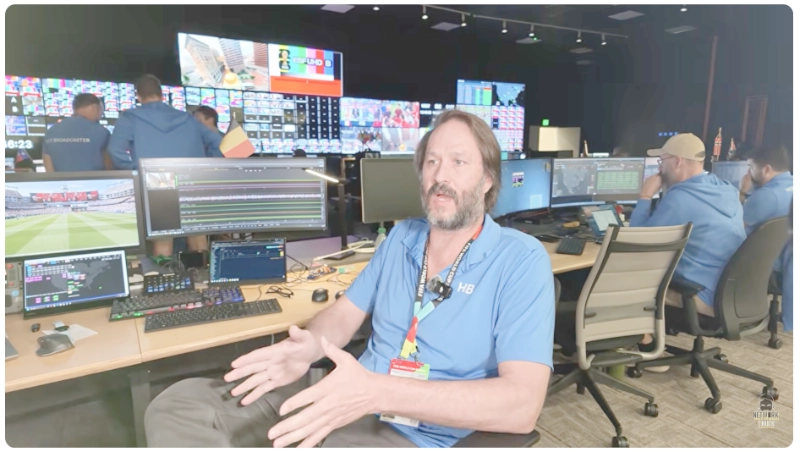
Take a look inside the World Cup and how it was produced.
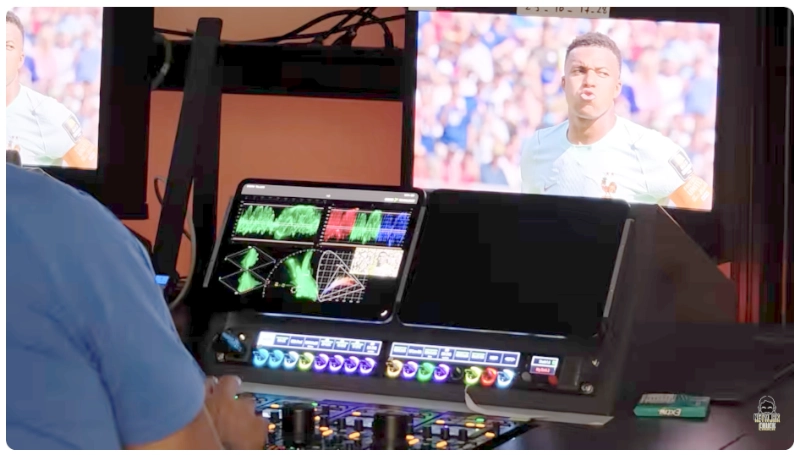
There were a lot of moving parts to make it all work smoothly for sure, but at the core of the system was the Bridge Technologies VB440.
Monitoring the network and the content was of primary importance. The Bridge Technologies VB440 was there doing the job, monitoring, analyzing, and visualizing of all the content over this extensive network.
A bonus was its ability to generate all the necessary waveforms, vectors, and gamut displays, for the camera shading positions utilizing web-based displays and iPad Pro’s throughout the complex as well as remotely.
When failure is not an option.
In this detailed behind the scenes video by Network Chuck you can see the configuration that made the World Cup games available to you. See the Bridge Tech VB440 (timestamp 3:55) configuration that allows the monitoring and adjustments for consistent and reliable video and audio for all the games. The IBC had the best teams making the video and audio for all the matches in one main site. All 16 stadiums have 3 – 200 Gig fiber connections feeding roughly 45 cameras and audio signals each. The signals are distributed over 150K multicast flows on the network to whoever is scheduled to receive it.